Concentration in the Pali tradition
80 Following in the Buddha's Footsteps
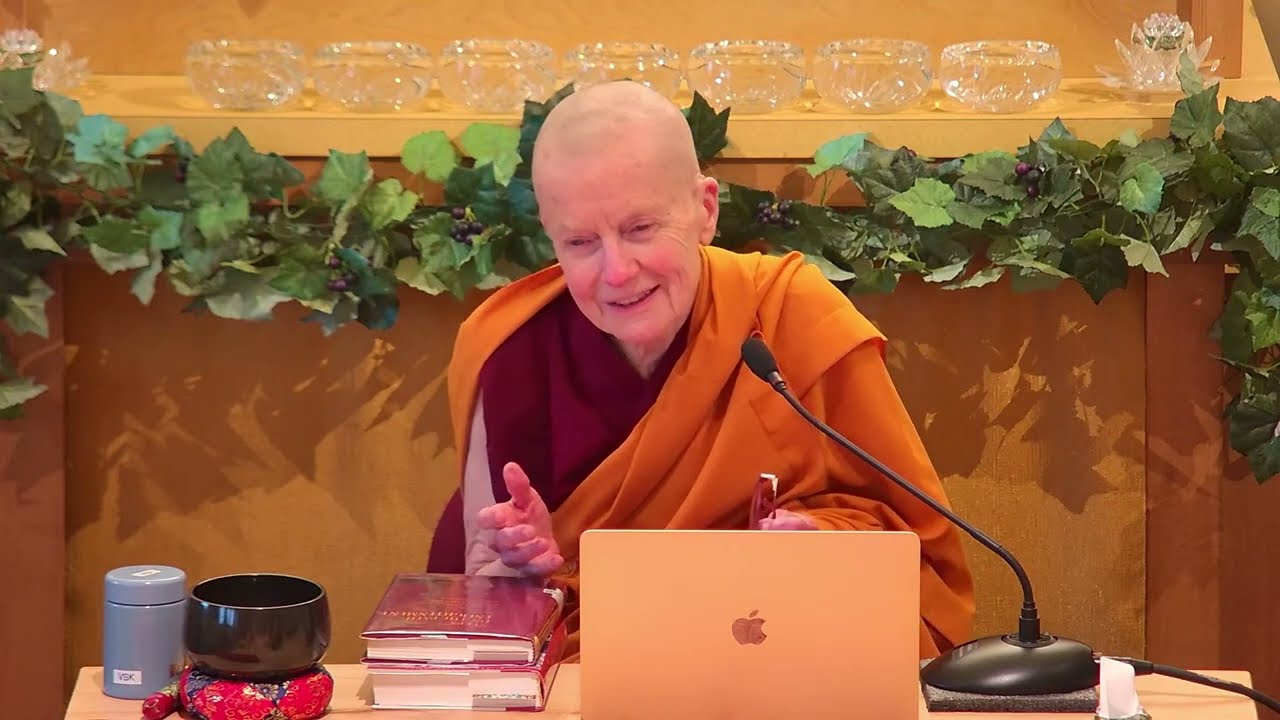
 Venerable Thubten Chodron
  Volume 4 Following in the Buddha's Footsteps
  Jan 16, 2026
 Part of an ongoing series of teachings based on the book Following in the Buddha's Footsteps, the fourth volume in The Library of Wisdom and Compassion series by His Holiness the Dalai Lama and Venerable Thubten Chodron.
- 40 objects of meditation
- 6 kinds of temperaments
- Preliminary sign, learning sign and counterpart sign
- Four brahamaviharas
80 Concentration in the Pali Tradition (download)
Contemplation points
- Venerable Chodron teaches that there are many different conditions that influence how we grow in the Dharma. Because of that, it’s important not to compare our practice with others and not have a schedule for our spiritual growth. What are ways you might see these thoughts arise in relation to your own practice? What are some antidotes to counteract these thoughts so that you grow your practice in a healthy way?
- What is the reason distractions come up in meditation? Why is practicing with the antidotes in real life situations necessary in order to start overcoming our afflictions? What benefit might increasing this skill be to your own spiritual practice?
- Consider the various meditation objects to develop concentration. What are some of the ways a meditator apprehends the various types of objects? Make some examples of how the meditator’s teacher might assess the meditator’s temperament to determine the best meditation object to recommend?
- What does it mean to give ourselves to the Buddha? What benefits arise from doing this?
- What are the three signs to be cultivated when developing serenity? Describe the process the meditator takes to progress through each.
- What are the four Brahmaviharas and what are some of the different contexts or purposes in which we practice them? Take some time with each of the four as described in the sutras from the text, meditating on each.

Venerable Thubten Chodron
Venerable Chodron emphasizes the practical application of Buddha’s teachings in our daily lives and is especially skilled at explaining them in ways easily understood and practiced by Westerners. She is well known for her warm, humorous, and lucid teachings. She was ordained as a Buddhist nun in 1977 by Kyabje Ling Rinpoche in Dharamsala, India, and in 1986 she received bhikshuni (full) ordination in Taiwan. Read her full bio.