



All royalties from this book will support the Sravasti Abbey Prison Project
About the book
Is the value of your life the worst thing you ever did? The men in prison who contributed to this book want you to know that it’s not. They have found in prison what they seldom encountered in society and never thought of developing inside themselves—compassion. This is the story told in The Key of Compassion: Finding Meaning Where You Least Expect It. Here the men articulate how they landed in prison, the reality of prison life, the benefits of investing in educational programs, and how the Buddha’s teachings on nonviolence and compassion changed their lives. Buddhist nun Thubten Chodron shares her experience of introducing prison inmates to the Buddha’s teachings on compassion and the revolutionary effect it has on their lives.
Contents
The book opens with Bhikshuni Thubten Chodron’s “Setting the Stage,” which provides an overview of the U.S. prison system. Chapters are then divided into themes, each beginning with a poem written by an incarcerated person, an overall summary and introduction, followed by letters and reflections from the men themselves. Chapter 8 provides additional reflections from those who volunteer in prisons. Throughout the book, readers will find artwork sent to Sravasti Abbey by incarcerated people over the last 22 years.
- Setting the Stage, by Bhikshuni Thubten Chodron
- How We Got Here
- The Reality of Prison Life
- Punishment vs. Programs: Practicing in Prison
- Working with the Human Heart
- Tools for Transformation
- Reflections from Volunteers
- Wisdom from the Inside
- Conclusion and Dedication
Appendices
- Meditation: The Great Ball of Light
- 1000-Armed Chenrezig Sadhana
- Taking and Giving Meditation
The story behind the book
Venerable Chodron reads excerpts
Excerpts from the inmates
Soup and Crackers, by John
I’ve made some changes and have been vegetarian for a whole month now. I’m still in the Hole. The other night I heard a guard telling the new guy on the row, who is also vegetarian, that no vegetarian meals were left and he would have to either go hungry or eat meat. This guy decided to pass on the meat. So without thinking much about it, I got together the soup, crackers, etc. left on my tray and passed them down—hand to hand via prisoners in the intervening cells—to this man with a note that said, “Don’t worry about who these came from, I was just concerned you were hungry.” A few days passed and this man figured out who had sent him the soup. He sent back a note saying, “Thanks, that was the nicest thing anyone has ever done for me in the last five years.” I would have never even thought about helping this man several years ago, but now I see how important it is to pay attention and help one another.
A Loving-kindness Dedication, by Kevin
May those who laugh
Laugh with someone,
Not at them.
May those who cry
Cry not alone by themselves
Or in the solitary regions of their hearts.
May those who speak
Speak words of wisdom, love, and kindness,
Not of ignorance and hate.
May those who fight
Fight not in violence, anger, or greed,
But for peace, justice, and equality—
And with a compassionate heart.
May those who sing
Sing not to divide or deride
But with words of joyful elevation
That celebrate and inspire.
May those who smile
Light up the world
With the love and warmth
And splendor of their smile.
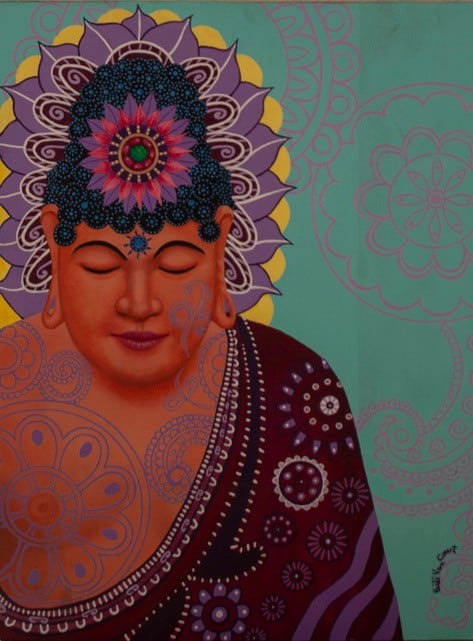
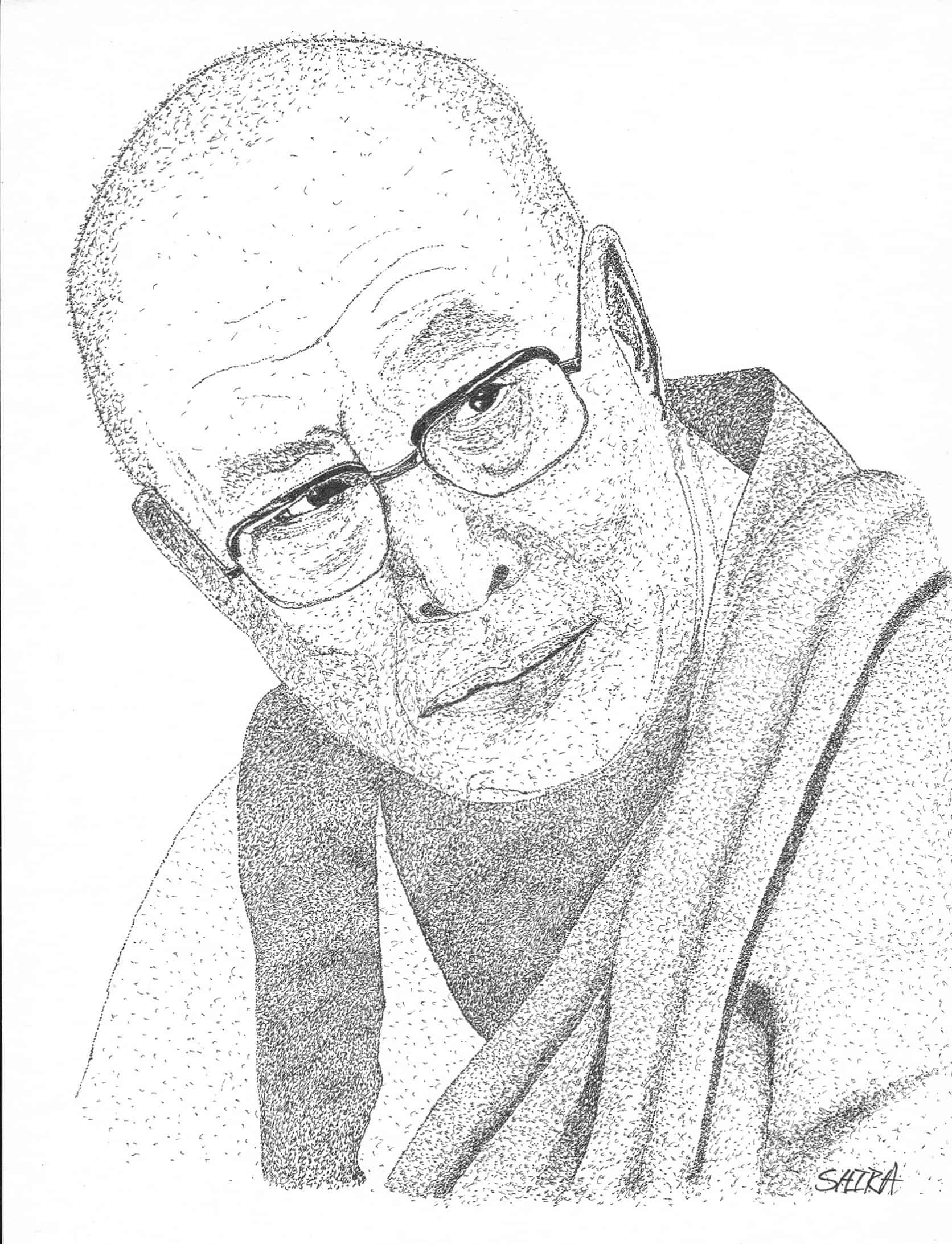
Dharma artwork by incarcerated people
Click on the thumbnail for a larger view. More art can be seen here.



Reviews
Help us spread the Dharma by posting a review on Amazon
Here is an inspiring and provocative book dedicated to prisoners and their lives within the US prison system after they have embraced the Buddhadharma. Ven. Thubten Chodron and other monastics from Sravasti Abbey illuminate the courage and determination these men have aroused in order to practice and cultivate compassion and patience in the face of the severe obstacles and challenges they encounter daily.
Get this book! It is the very best book about teaching and practicing Dharma in prison. Based on extensive experience working with inmates, Venerable Thubten Chodron shows us what prison life is like, what she teaches inmates, how they practice, and the ways in which they benefit. Her outstanding introduction leads into an edited collection of writings from more than twenty inmates and six volunteers. There are so many inspiring stories!
“The Key of Compassion” is a stunning compilation. The book holds many stories—some stories help frame our carceral system while others contemplate profound suffering and transcendence. Bhikshuni Thubten Chodron begins by opening our eyes to our current societal reality, contextualizing the American prison industrial complex and its long reach. After wading through this visceral and essential framing, readers are rewarded with sage wisdom. Bhikshuni Thubten Lamsel’s careful and progressive selection of stories from those who survive being inside follows the introduction. This combination—contextualizing alongside wisdom from within—is potent, making “The Key of Compassion” a rare treasure.
Readers are invited through arduous journeys of reckoning, bringing to light what’s often only implicit. Some stories walk us through the process of searing self-investigation—an unearthing of the causes and conditions that created certain worldviews and corresponding harmful action. Some stories show the monumental movement from self-hatred and harm to self-compassion and love. Other stories examine the meaning of meaningful accountability.
But most importantly, “The Key of Compassion” accomplishes a nearly impossible task—the book showcases true solidarity through the creation of a platform that allows wisdom to flow from within. From this mutually beneficial posture, we touch the sacred web of interconnection and sense the divinity residing in all of us despite our individual struggles. With deep gratitude for a gift of such magnitude, I offer my sincerest thanks for each and every life that made these words possible.
The Key of Compassion is one of those rare, thoughtful books that completely changes how you look at life behind bars. It focuses on the idea of inner transformation, leaning into the Buddhist belief that you can still grow even when you’re stuck in the most restrictive environment imaginable. Using actual stories from incarcerated people and the wisdom of Thubten Chodron, the book shows how someone can take the heavy weight of fear or shame and slowly turn it into something like self-respect. It’s refreshing because it doesn’t just treat prison as a place to be punished; instead, it looks at prison as a training ground for the mind—a place where things like meditation, raw honesty, and even a little humor can lead to a real change in perspective. What really stuck with me was how it bridges the gap between abstract spiritual ideas and the gritty, daily struggle of prison life.
Thubten Chodron’s writing is calm and incredibly humane, which is exactly what a subject this heavy needs. It doesn’t follow a traditional format, but there’s a really clear, satisfying arc: you start by understanding how the mind works, moving through the hard work of dealing with pain, and eventually ending up at a place of healing. The pace is steady—it never feels rushed—giving big ideas some much-needed room to sink in. The real heart of the book is in the stories from the inmates and teachers themselves. The Key of Compassion is a powerful read because it challenges and is a reminder that even inside a cell, it is possible to build a gentler, more compassionate life.