Inspiring story
By D. D.
 Incarcerated people
  On Cultivating Wisdom
  Dec 5, 2005
Just under two months after D. D. was released, he gave an account of his journey of incarceration and how the Dharma changed his life.
After six years of incarceration I’ve finally made it home, hopefully with my sanity intact. It’s been an incredible journey with much pain and regret, but also much joy and healing. The journey of incarceration has come to an end, and yet I know my journey has just begun. After more than two months home and my first week on the Vajrasattva retreat, at the urging of my kind-hearted teacher, Venerable Thubten Chodron, I would like to humbly relate some of my experiences.
But before I explain my experience of release from prison, I would like to share the manner that I dealt with my incarceration in the beginning. After my arrest, and initial incarceration, I was emotionally and fundamentally a mess. I was confused, depressed, ridden with guilt and shame, angry and in pain. I was spiritually empty, or at least didn’t recognize my spiritual potential at that point as this was before I had met the Dharma. Yet even at that spiritually empty point there was a longing, a spiritual yearning to fill the void that was previously filled with unwise sexual behavior, depression, and alcohol abuse.
Also I had a heartfelt desire, almost a grim determination to address these emotional ills that had afflicted me for so long. I immediately began working on myself after the fog of alcohol and acute depression slowly began to lift. I was determined to survive this seemingly hopeless experience. My mantra back then was, “It’s gonna be alright” and “I’ll get better.” Thankfully things did get better even after more than a year of incarceration. I was served divorce papers. I do not have children, which surely made things easier, and it was a amicable divorce.
As I said, things most certainly did get better. But it didn’t happen magically or overnight. It took time and it took work. I started by admitting my guilt, avoiding blame, and accepting responsibility for my present situation. It was a gradual process of speaking with counselors about depression and taking anti-depressant meds. Eventually when the time came for me to decide whether to continue taking meds, thankfully the staff was very cooperative in supporting my decision to be weaned off the meds. I didn’t want or need any more chemicals in my life, i.e., psychotropics. In conjunction with a continuing relationship with the mental health staff, I had a strong desire to enroll in various self-help styled programs, for a total of almost four years of intensive, comprehensive programming. I chose to do this of my own accord. This also included a six-month comprehensive substance abuse program, in which I learned tools to help me cope with my past alcohol abuse and address emotional issues through introspection, cognitive approaches (correcting thinking errors), and utilizing a peer group setting for feedback and support.
Of course, the Dharma was instrumental in my recovery. In fact a spiritual component is critical to any recovery program. In my experience the spiritual element is so critical that true recovery is not possible without it. That said, I was very impressed and in some cases deeply moved by the staff-counselors of the recovery programs who, in my opinion, were, to a person, dedicated, caring, compassionate, stern when needed, and knowledgeable people. Overall they were outstanding human beings who I’ll never forget and who reaffirmed my faith in humanity. Clearly some of my counselors could have been making more money in other careers in which they qualified but they were in the trenches with us, treating us with respect and dignity, and living their true calling. I must add that my opinion is contrary to the popular and deeply ingrained attitude of most imprisoned people who view staff with deep suspicion—as enemies at worst or as those who place obstacles in our path at best.
This positive experience in the substance abuse program subsequently inspired me to stay on as a substance abuse program facilitator (my prison job) so that I could hopefully give back a little of what was given to me. I found that facilitating in the growth, healing and recovery of another human being, regardless of their race, class, education, attitude, or background, gave my life while incarcerated purpose and meaning. It also afforded me an opportunity to continue bettering myself and to keep the principles that helped me recover fresh and inspiring. I found that this job also meshed well with the Dharma, especially the bodhisattva ideal to benefit all beings. Compassion in action, so to speak. I took my job very seriously, but at the same time did not forget to laugh and keep things light to prevent myself and others from becoming too uptight or rigid in our approach. Humor is, after all, very important on this path of life. This is the wisdom that has been imparted to us from all the great saints, sages, masters and pundits.
Incarceration also gave me the opportunity to study and become more well read. I read—from Dickens, Darwin, and Dostoevsky to Jung, Lao-Tzu, and Joseph Campbell. I was particularly moved by the prison advocate Bo Lozoff whose books advocated reforming the penal system through deep personal change, one incarcerated person at a time.
As time wore on I felt good about myself and life in general. There was a new-found peace of mind that was sorely lacking before. The peaks and valleys of emotional instability that I had experienced before were now nowhere as sharp as they had previously been. They were now more like small bumps in the road and were therefore much more manageable. There were times of depression to be sure, but they were nowhere near the debilitating type or for duration that I had experienced in the past. They now were much easier to manage through constant application of the Dharma methods of Lam Rim—purification, meditation, four opponent powers, altruistic intention, etc. Dharma methods I’m only now beginning to familiarize myself with to their full extent.
I feel like I have my life back. This is a feeling which I’m not sure I ever really had up until this point. I strongly feel that my heart teacher, Venerable Chodron, helped me in this regard and for that I’m eternally grateful. Allow me to give an example. I received some transcripts in the mail of some talks on karma that Venerable had given. One of the headings was “Karma is Not Punishment.” Previously after reading Joseph Campbell, I had an inkling that perhaps my incarceration was more of a necessary spiritual journey, sort of a trial by fire in which there was an opportunity for profound spiritual transformation. But I hadn’t quite articulated that notion in my mind. Then I read Venerable’s transcripts and began to think about them very carefully. This ruminating on the teachings brought about a fundamental paradigm shift inside me. To put it plainly, it changed how I viewed my incarceration.
This paradigm shift came about gradually. If someone would have told me at the beginning of my sentence that my incarceration was not punishment, I would have told them where to go! But, over time, instead of viewing my incarceration through the paradigm of punishment, self blame, or guilt which at times I was prone to doing, I began to look at my time in prison in another light: I created the causes and conditions to arrive in prison through my choices. Choices = volitional actions = karma. I planted the seeds, the results came. I understood that if I told myself, “My incarceration is hell, it is punishment,” then I would be miserable and it would most definitely feel like hell and punishment. Suffering is based solely on our paradigm. When we think we are impure and negative and that our situation is hopeless, then it becomes just that. I saw so many people in prison viewing their world in this way and they were clearly unhappy, angry, blaming, complaining, and generally negative. I simply refused to give into this kind of thinking by using a cognitive approach and recognizing my thinking errors.
Through the purification practices of Tibetan Buddhism, I was able to begin the process of identifying my potential for perfection and earnestly putting energy into developing it. I was then able to cultivate a more positive self image. Believing that we are pure and that no situation is inherently negative is the first step in becoming pure. I began to see the positive potential in not only my situation but also in myself. In addition, I tried to surround myself with positive friends, people who wanted to better themselves, had a good sense of humor, and were striving to act ethically. My cellie Maitri was a good example of this kind of person. Are not good Dharma friends a part of practicing teachings?
But more importantly, it was understanding that karma is not punishment that had changed my paradigm. Simply put, I understood that my present situation was the result of cause and effect. I planted the seeds, now come the results. There was no need for a heavy value judgment or the dualities of good, bad, right, wrong. Incarceration was an opportunity, not punishment. It was an opportunity to better myself, to grow, heal, and transform myself and practice the Dharma. It was free of the worldly distractions of bills, taxes, children, spouse, gas, insurance, and also for me, it was especially free of sex and alcohol. I felt unburdened and thus better able to practice the Dharma. I changed my outlook from one of fear, confusion, anger, and blame to one of acceptance and even gratitude for being given such an opportunity to practice. I was grateful also for such a kind, compassionate, and qualified spiritual mentor, such as Venerable Chodron, to help me along the path.
The experience of incarceration improved immensely, once I changed the way I viewed it. Consequently, once I changed my paradigm I also began to gradually change my behaviors. I quit viewing porno pictures; I quit smoking and started to work out regularly. I began to act more ethically, with honesty and integrity, treating people with respect and dignity. Because I was developing these qualities within myself, it was easier to act this way towards others. Of course, I’m not a perfected being by any means and I still had/have my moments of depression and anger. But the more I diligently applied the Dharma methods—the antidotes to the gross negative feelings and imprints—given to me by my kind guru, then the better I felt about myself and life in general. In fact I began to find a new happiness, a new hope and a new and better life in the Dharma.
I realize this may sound like some corny, religious born-again testimonial, but unlike some of the superficial spiritual experiences delivered by an outside agent in some traditions, I felt my experience to be more profound. This was because even though I had the Three Jewels and my teacher to take refuge in, guide me, and inspire me, I was the one ultimately doing the heavy lifting of doing the work of applying the practices. After all, what good would it have done me if I were to proclaim my new found joy in the Dharma and I then turned around and smacked a guy in the face for stepping on my toe in chow-line? Not only applying the practices, but also doing the visualization meditations brought about healing, compassion, and transformation. His Holiness says, “Develop the good heart.” I cannot rely on an outside agent to do the work of developing the good heart for me; I have to do the work myself. I tried very much to carry all of this with me as my release was approaching. I wanted very much to practice and live the Dharma upon my release.
Are there problems in prison? Of course!!! Is being locked up a problem? I guess it depends on one’s paradigm. All we are really doing upon release is exchanging the problems of incarceration for a different set of problems associated with release. I tried to avoid the trap that so many imprisoned people fall into, thinking that all our problems will magically disappear once we are released. I call this “the panacea of physical release.” It is a fantasy, a delusion. All we are doing is exchanging the physical prison of incarceration for the samsaric prison of so-called release.
Don’t get me wrong, of course I’m very happy to have been released and would definitely prefer that over incarceration. I’m just trying to keep things in perspective and temper the joy of release with the understanding that I cannot take the happiness of release for granted. I must create the causes for my happiness through daily Dharma practice and living ethically. Then the results will come. I must not be anxious, depressed, or disappointed by expecting the results of happiness and freedom to come immediately. Practice, practice, practice. Create the causes, results will come in due time. It is a practice in patience.
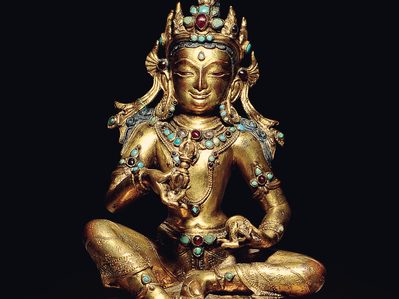
Wanting to create the causes is the reason why I’ve taken my kind heart-teacher’s advice to participate in the Vajrasattva retreat. It would have been easy for me to decline Venerable Chodron’s request to do the retreat, with the excuse that my life is simply way too hectic presently because I’m trying to deal with life after release. This indeed is exactly what I told her when she asked, being the lazy sentient being that I can sometimes be. But thankfully, Venerable kindly and rightly reminded me that it is precisely times like these when we need Dharma the most. Looking back after a couple of weeks of retreat, I’m very glad that I did participate during this time of release and opportunity.
I know in many ways my journey is just beginning. I’m very grateful to Venerable Chodron and my Dharma brothers and sisters, those in prison, at home, and at Sravasti Abbey, for giving me this precious opportunity to share such a powerful and transformative retreat. It is, after all, my sincere and true motivation to improve myself so that I can be of greater benefit to all living beings.

Incarcerated people
Many incarcerated people from all over the United States correspond with Venerable Thubten Chodron and monastics from Sravasti Abbey. They offer great insights into how they are applying the Dharma and striving to be of benefit to themselves and others in even the most difficult of situations.